How to prevent frozen pipes before winter
Frozen-pipe prevention starts with finding the vulnerable length of pipe, not with wrapping every visible fitting. Focus on pipes in unheated spaces, exterior walls, crawl spaces, garages, and poorly sealed cabinets. Then combine insulation, safe heat, water shutoff knowledge, and a plan for a cold snap.
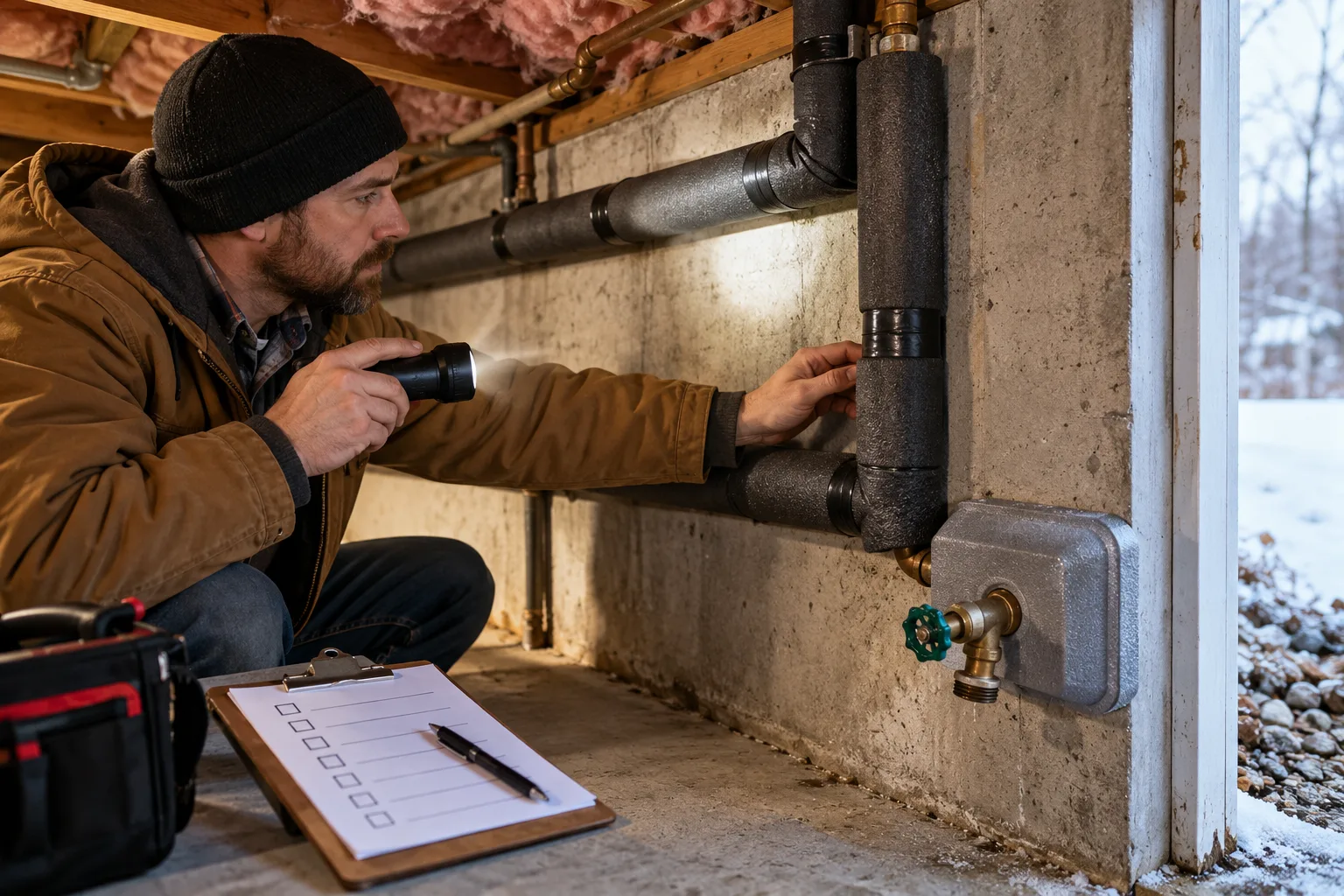
Stop boundary: know the main shutoff before a freeze. If a pipe bursts, water is near electricity, or you cannot safely access the area, shut off water if safe and call an emergency plumber.
Find the exposure
| Location | What to check | Safer next step |
|---|---|---|
| Garage, crawl space, attic | Drafts, missing insulation, pipe contact with cold surfaces | Improve enclosure or have insulation assessed |
| Exterior-wall cabinet | Cold air entering behind the cabinet | Keep doors open during extreme cold only if safe and away from children |
| Outdoor faucet | Hose attached, interior shutoff, trapped water | Disconnect hose and follow the fixture’s winter procedure |
Prepare before the forecast
- Locate the main shutoff and label it. Test that household members can reach it without tools.
- Disconnect garden hoses and drain outdoor fixtures according to the plumbing design; do not assume every faucet is frost-proof.
- Inspect exposed pipes for gaps and secure approved insulation without covering valves, leaks, or unsafe heat sources.
- Keep the home at a stable safe temperature during cold weather. Do not use an oven, grill, or unapproved heater to warm a room.
- During a severe cold snap, open interior doors where it improves warm-air circulation and allow a small flow only when local professional guidance says it is appropriate and drainage is safe.
- After the freeze, inspect slowly for bulges, dripping, low pressure, or unusual sounds before restoring full use.
Worked example
A kitchen sink sits on an exterior wall. The homeowner finds a draft behind the cabinet and a hose still attached outside. They disconnect and drain the hose, record the shutoff location, improve the enclosure through an appropriate repair, and monitor the cabinet during the next cold event. They do not rely on a space heater inside a closed cabinet.
Escalate early
- Water is spraying, a wall is swelling, or a ceiling is staining.
- A pipe is frozen and thawing could send water into a hidden space.
- There is water near electrical equipment or a combustion appliance.
- The cause is inside a wall, slab, or shared building system.
Sources
The US Department of Energy winter guidance supports weatherization and safe heating choices. Local water utilities and a licensed plumber control fixture-specific procedures; home warranty checklists are useful prompts, not universal code.