Decide when a home repair should leave the DIY list
The useful question is not whether a task looks small. It is whether a mistake could cause fire, flooding, structural damage, exposure, or a repair that becomes harder to trace.
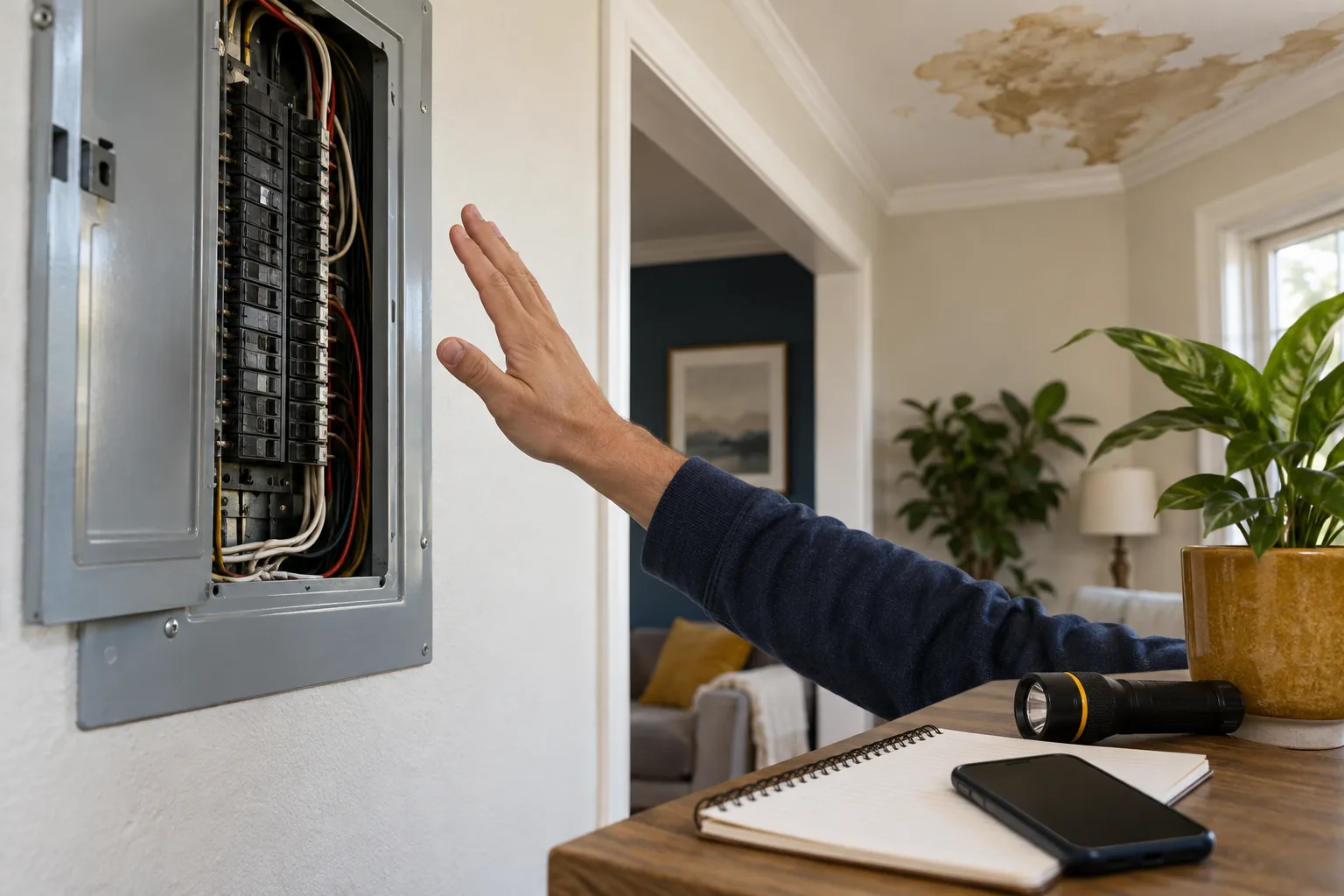
The stop-and-handoff test
| Signal | Safe first step | Handoff boundary |
|---|---|---|
| Water is active or hidden | Stop the obvious source if safe, photograph the area, and protect belongings. | Call appropriate help when the source is concealed, spreading, or near electrics. |
| Heat, gas, or combustion is involved | Follow emergency instructions and leave the system alone if unsafe. | Use qualified service; do not test a suspected gas or combustion fault by trial and error. |
| Structure or hazardous material may be involved | Keep people away and record the change. | Do not cut, sand, open, or load the area without appropriate assessment. |
Give the professional better evidence
- Describe the symptom without naming a cause.
- Record location, timing, weather, recent work, and what changed.
- Photograph a wide context view and a close detail.
- List what has already been switched off, cleaned, moved, or tested.
- Ask what the proposed repair excludes and what would trigger a further investigation.
Boundary: local codes, leases, insurance, and building construction change the correct response. This guide helps frame a call; it is not an inspection or a licence to work on hazardous systems.
Describe the symptom without prescribing the repair
A useful request says what happened, where, when, and what changed. It does not insist that the cause is a blocked pipe, a bad seal, or a structural crack before anyone has inspected it. This leaves room for the professional to test the right hypothesis.
Prepare a handoff packet
- One dated timeline of the symptom.
- Wide and close photographs.
- Equipment model, previous repairs, and manuals if available.
- What has already been switched off or attempted.
- Access constraints, tenancy or condominium rules, and the question you need answered.
Compare the response, not only the price
Ask whether the proposed work addresses the source, what is excluded, what evidence will be returned, and what happens if the first hypothesis is wrong. A cheap surface repair may be poor value if it delays finding an active leak or unsafe system.
For the wider record, use the maintenance register; for selecting the person who will perform the work, use the contractor worksheet.
Questions to ask before work starts
- What evidence supports the proposed cause?
- What is included, excluded, and protected during the work?
- What would make the first solution fail?
- What record, photo, test, or warranty document will be handed back?
These questions do not turn a homeowner into an inspector. They make the boundary between observation, diagnosis, repair, and follow-up visible.
After the visit
Record what was observed, what was confirmed, and what remains a hypothesis. This distinction prevents a first impression from becoming a certainty and lets you compare proposals against the same scope.
Keep the boundary visible
Write down the exact point where observation ended and professional work began. This helps separate a safe DIY check from a diagnosis or repair that should not be repeated without the right qualification, equipment, or local permission. It also gives the next contractor a cleaner starting point.
The boundary should also account for access and consequences: a simple-looking task in a difficult location may be riskier than a larger task on an accessible surface. Record why the handoff was made, not only who was called.
Sources: US EPA moisture control and US Department of Energy home checklist.