Read moisture warning signs before covering them up
Peeling paint, a musty smell, wet spots, and persistent window condensation are observations, not diagnoses. Record where and when they occur, then find the moisture source before repainting or sealing the surface.
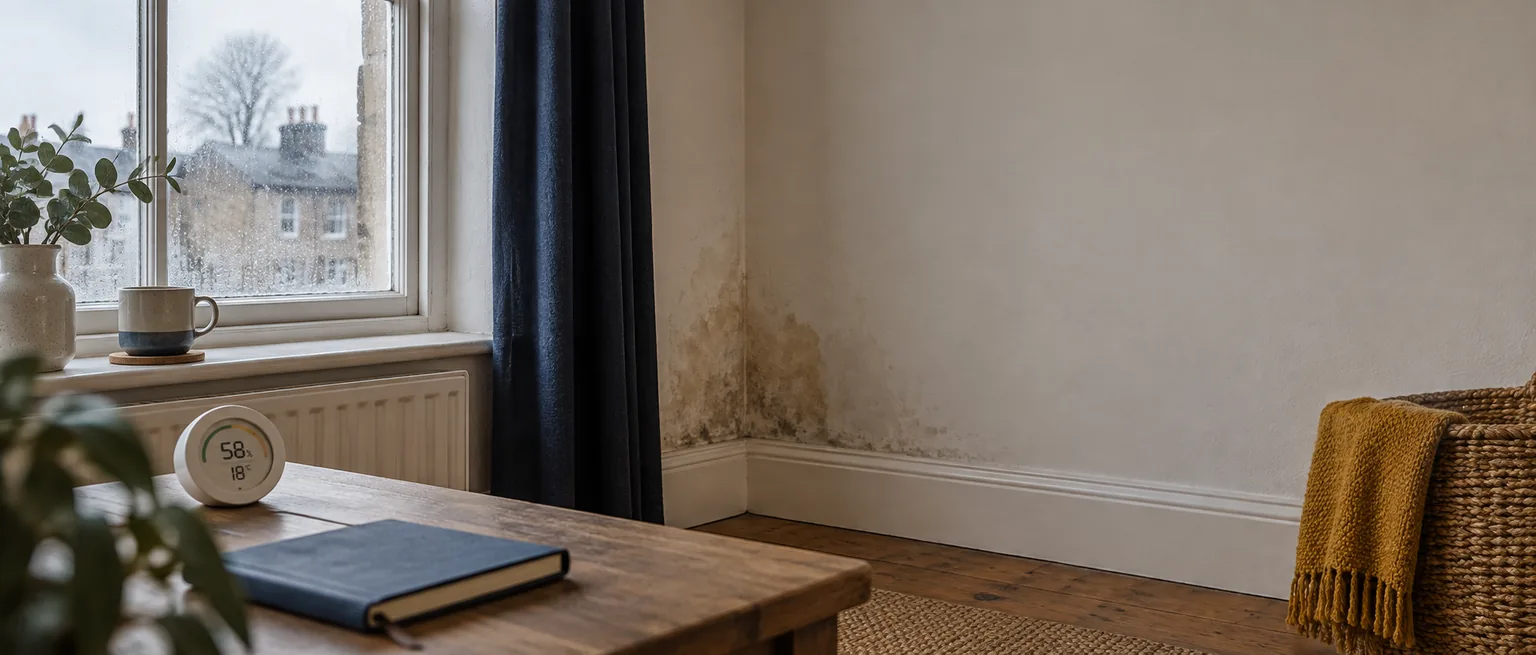
Observation to next action
| Observation | Record | Next action |
|---|---|---|
| Condensation that returns | Room, weather, ventilation state, and time of day. | Check ventilation, humidity, cold surfaces, and moisture-producing activities. |
| Peeling paint or rippling wall covering | Exact location, recent rain, plumbing nearby, and whether the area is expanding. | Investigate the water source; do not paint over a wet surface. |
| Musty smell or hidden dampness | When the smell appears and which materials or rooms are affected. | Look for a concealed leak or wet building material; escalate if the cause is unclear. |
The 24-hour response
- Stop the source if it is safe and obvious, such as an accessible shutoff or overflowing container.
- Photograph and date the affected area; record whether it grows after rain, bathing, cooking, or HVAC use.
- Dry wet materials promptly when safe, but do not disturb suspected contaminated water or a system that may contain mould.
- Arrange appropriate help when the source is hidden, the area is extensive, the building system is involved, or health concerns are present.
Boundary: a moisture meter or humidity reading can add information but cannot identify every leak or prove that a building is safe. Fixing visible mould without fixing the water source is not a complete repair.
Build a moisture timeline
The same mark can have different causes. Record when it appears, whether it follows rain, bathing, cooking, heating, or a plumbing event, and whether it grows. A dated sequence is more useful to a contractor than “the wall feels damp.”
| Question | Useful observation | What it changes |
|---|---|---|
| Where is the first sign? | Window, ceiling, external wall, cabinet, floor, or around a pipe. | The likely investigation route and the person to contact. |
| When does it worsen? | After rain, showering, cooking, cold nights, or system use. | Whether weather, ventilation, condensation, or a service is relevant. |
| What is affected? | Paint, plaster, timber, insulation, carpet, belongings, or air-handling equipment. | The urgency and the boundary of safe cleaning. |
Do not confuse a surface repair with a source repair
Cleaning, sanding, sealing, or repainting can make a mark less visible while the water continues behind it. Photograph before disturbing the surface and keep invoices, readings, and repair dates together. If the same sign returns, the record should show that the previous action did not address the cause.
When the next step is urgent
- Active water is near electrical equipment.
- A ceiling is sagging or a wall is changing shape.
- There is a persistent smell with no visible source.
- Contaminated water, sewage, or extensive wet material is involved.
- Anyone in the home has health concerns connected to the space.
Use the maintenance register to keep the observation history and the repair-boundary guide before opening or covering a building element.
Close the loop after the repair
After a repair, keep the original photos and add a dated follow-up observation. Has the smell stopped, has the surface stayed dry through the next weather event, and has the material recovered? If the sign returns, do not simply repaint again. Compare the new timeline with the first one and tell the professional what changed after the intervention.
Do not use a single humidity reading as a verdict. Compare location, weather, ventilation, surface temperature, and change over time. The useful output is a better question for the next inspection, not a number detached from the building.
Sources: US EPA mould, moisture, and the home and US EPA moisture prevention.