Check attic insulation and ventilation in the right order
An attic check should start with moisture and air pathways, then insulation depth and ventilation. Adding insulation over a leak, blocked soffit, or exhaust fan that terminates in the attic can hide the cause and make damage harder to see.
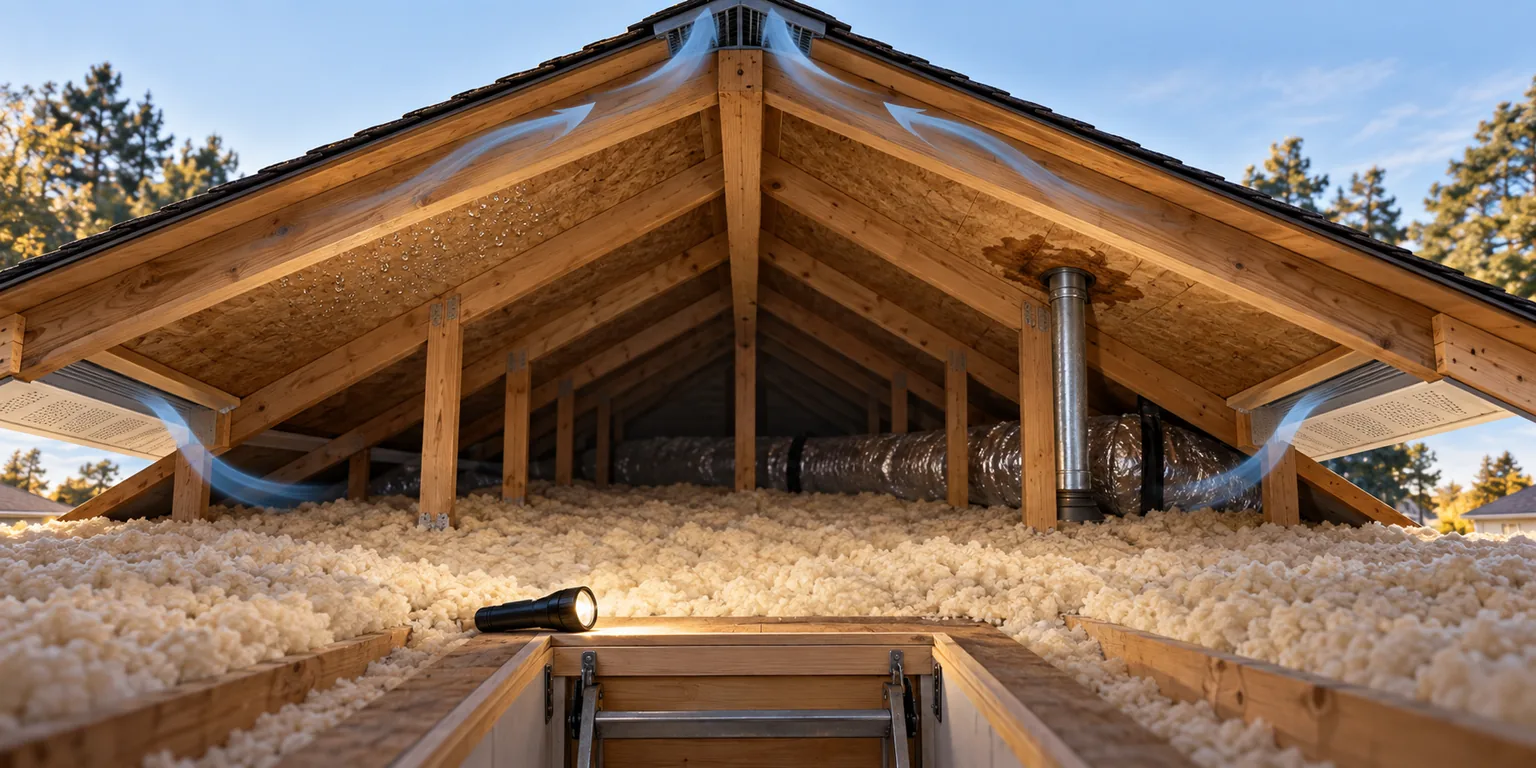
The inspection sequence
| Observation | What it may change | Next record |
|---|---|---|
| Wet insulation, staining, or damaged wood | Stop before adding material; investigate roof, flashing, plumbing, or vapor and air leakage. | Location, weather, moisture pattern, and photos from a safe position. |
| Bathroom, kitchen, or dryer duct ends in the attic | Correct the exhaust route to the exterior with a qualified professional. | Duct type, termination, condensation, and access constraints. |
| Insulation thin or missing near the eaves | Plan air sealing and insulation without blocking the ventilation path. | Depth by zone, baffles, soffit openings, and ceiling penetrations. |
| Dark mold-like growth, unsafe access, or exposed wiring | Leave the area and arrange qualified assessment. | Do not disturb material; note the exact location. |
Walk the boundary, not just the middle
- From a safe access point, look for roof leaks, staining, daylight at unwanted joints, compressed insulation, and animal damage.
- Trace every exhaust duct. Moist air from bathrooms, kitchens, and dryers belongs outside, not in the attic.
- Check whether insulation covers the ceiling plane continuously and whether eaves have baffles or another clear route for intake air.
- Look for penetrations around lights, pipes, wiring, and the attic hatch. Air sealing is a separate task from placing insulation.
- Record the condition before work. Photograph labels and measurements, but do not enter an unsafe area or contact suspect material.
Example: adding insulation to a cold bedroom
If a bedroom feels cold, the attic may be relevant, but the answer is not automatically more insulation. A blocked soffit can trap moisture; a bathroom fan discharging into the attic can wet insulation; a roof leak can mimic an insulation problem. Identify the pathway first, then choose air sealing, ventilation repair, insulation, or a combination.
Common mistakes
- Covering wet or mold-affected insulation before finding the moisture source.
- Blocking soffit vents with loose-fill insulation.
- Ventilating an attic by opening a hole without a balanced intake and exhaust plan.
- Entering without stable decking, lighting, protective equipment, and awareness of wiring or heat sources.
Boundary: roof, electrical, mold, asbestos, combustion, and ventilation work can require qualified trades and local code review. Stop if there is active water, unsafe wiring, structural damage, suspected asbestos, or a combustion appliance with uncertain venting.
Use the moisture warning guide to keep a room-side record and the professional-boundary guide when the observation crosses into repair.
Sources: U.S. Department of Energy: durable attics and DOE guide to home insulation.