How to measure indoor humidity before chasing the cause
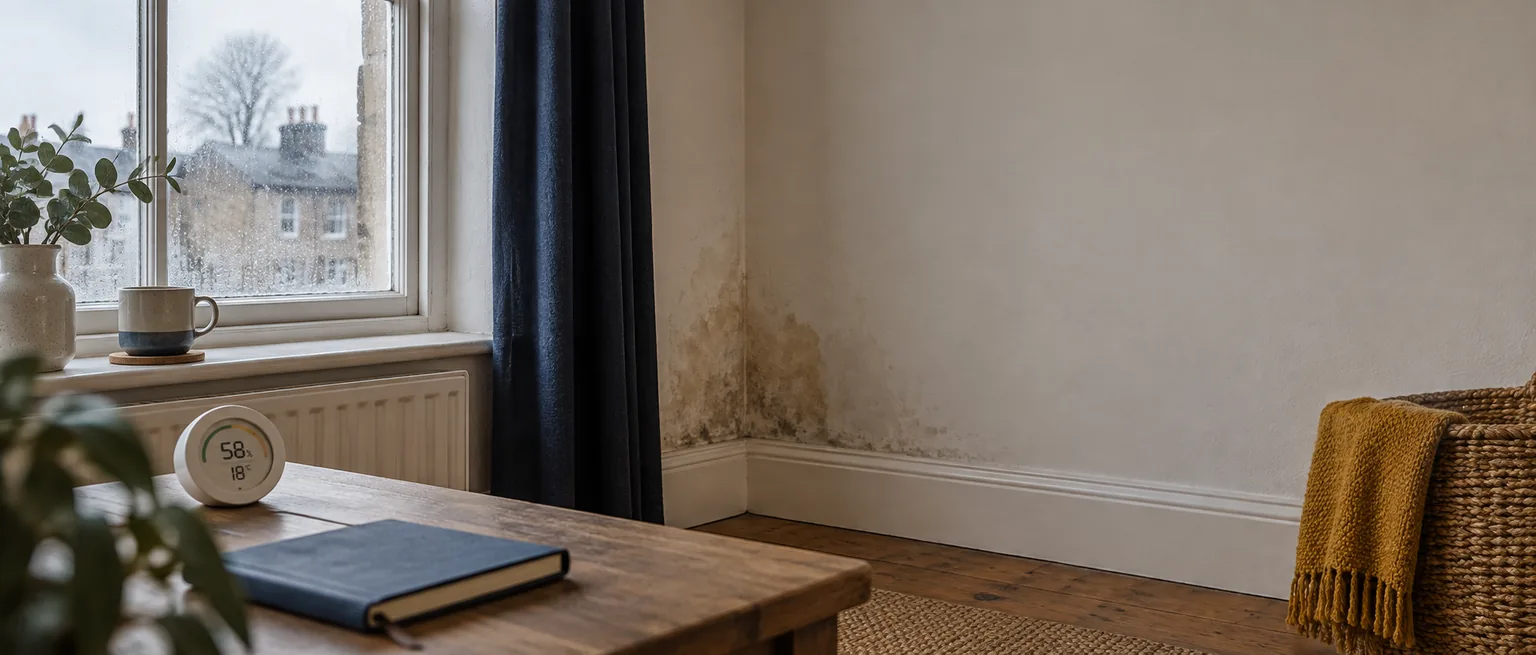
A hygrometer can document indoor conditions, but it cannot identify a leak, diagnose mold, or prove that one threshold is safe for every home. Measure consistently, record context, and use the pattern to choose the next investigation.
Working boundary: This page organizes observations and the next decision; it does not replace a professional, local rule, or veterinary advice.
Before you start
Prepare one sheet, the applicable official sources, and a place to record what changes. If information is missing, mark it unknown instead of filling the gap with a guess.
Decision table
| Item | What it shows | Next move |
|---|---|---|
| Room and position | Readings change near windows, kitchens, bathrooms, and exterior walls | Keep the position consistent |
| Temperature and RH | Humidity varies with temperature | Log both at the same time |
| Activity and weather | Cooking, showers, drying clothes, and rain alter the pattern | Mark the event instead of guessing |
A five-step procedure
- Define the scope and the specific question.
- Collect the relevant observations, dates, measurements, or documents.
- Compare them with the table without turning uncertainty into certainty.
- Take the low-risk action that answers the next question.
- Record the result and revisit it at the stated update trigger.
Worked example
For three days, read the same bedroom morning and evening, noting a shower, cooking, open windows, and rain. A repeated spike after one activity suggests a ventilation question; a localized damp patch or persistent smell needs source investigation rather than a new gadget.
When to stop or ask for help
- Stop if a person, animal, building, or sensitive data could be put at risk.
- Escalate if the source is unknown, the problem persists, or a rule depends on destination.
- Do not turn a household measurement or observation into a diagnosis.
Keep a useful record
Record the date, source checked, decision made, and review trigger. Revisit the sheet when an official rule, season, treatment, variety, or home condition changes.
Related reading: moisture warning signs · attic insulation ventilation check · when to call professional.
Sources and limits
The US EPA mold prevention guidance emphasizes moisture control and source identification. The instrument manual can explain accuracy and placement, but it cannot establish a medical or regulatory diagnosis.
This guide is deliberately a preparation method, not a guarantee of an outcome. Keep the evidence behind your decision: a measurement, photo, date, official instruction, or open question. That record makes the next conversation more precise and prevents repeating the same step without new information. Keep the checklist with the relevant records so another person can understand the decision.